
Introduction: The Undead That Will Not Stay Buried
Zombie movies occupy a unique place in the horror genre. Unlike vampires or werewolves, zombies have no personality, no charm, no redeeming qualities. They are simply hungry, and their hunger is insatiable. That simplicity is what makes them so effective as a metaphor for whatever society fears most at any given moment. Whether it is consumerism, pandemic disease, social collapse, or the dehumanization of modern life, the zombie can represent it all.
This list compiles the greatest zombie films ever made, from the genre-defining classics to modern reinventions that push the boundaries of what a zombie movie can be. Each film brings something different to the genre, whether it is social commentary, visceral terror, dark comedy, or emotional depth. If you are a horror fan and you have not seen all of these films, you are missing some of the finest entries in the genre.
1. Night of the Living Dead (1968)
George A. Romero’s low-budget independent film invented the modern zombie and changed horror cinema forever. The film follows a group of strangers trapped in a farmhouse as the recently dead rise from their graves and begin to eat the living. The film’s black-and-white cinematography, its documentary-like realism, and its shocking ending make it one of the most influential horror films ever made.
Night of the Living Dead is not just a horror film; it is a social commentary that reflects the anxieties of the late 1960s. The casting of Duane Jones, a Black actor, in the lead role was not intentional, but the result, in which the Black protagonist survives only to be killed by a white posse, was a powerful statement that resonated deeply during the civil rights era. Romero’s zombies were not called zombies in the film; they were referred to as ghouls, but the template they established is the one that every zombie film since has followed.
2. Dawn of the Dead (1978)
Romero’s sequel is even more ambitious than its predecessor, using the zombie apocalypse as a vehicle for scathing critique of American consumerism. The film follows a group of survivors who barricade themselves in a shopping mall, where they find everything they need to live comfortably but must constantly defend against waves of zombies drawn to the mall by some dim instinct from their former lives.
Dawn of the Dead is a film about the emptiness of material abundance. The survivors have everything they could want, but they are still trapped, still afraid, and still ultimately doomed. The film’s satirical edge is sharp, and its action sequences are genuinely thrilling. Tom Savini’s special effects makeup is legendary, and the film’s climax is one of the most powerful in horror history. It is both a thrilling zombie movie and a biting social commentary.
3. 28 Days Later (2002)
Danny Boyle’s reinvention of the zombie genre replaced the shambling undead with sprinting infected humans driven by a rage virus. Cillian Murphy plays a hospital patient who wakes from a coma to find London completely deserted, and his journey through the empty city is one of the most haunting sequences in modern horror. The film’s digital cinematography gives it a raw, immediate quality that enhances its terror.
28 Days Later is a film about the fragility of civilization. It shows how quickly the structures that hold society together can collapse when faced with an invisible, unstoppable threat. The film’s depiction of abandoned London is extraordinary, with scenes of deserted landmarks that feel eerily prescient in the age of pandemic lockdowns. The infected are terrifying not because they are undead but because they are us, stripped of reason and consumed by rage.
4. Shaun of the Dead (2004)
Edgar Wright’s brilliant parody of zombie movies is also one of the best zombie movies ever made. Simon Pegg plays Shaun, a slacker who must step up and lead his friends and family to safety when a zombie apocalypse hits suburban London. The film’s humor is sharp and consistent, but it never undermines the genuine stakes of the situation.
Shaun of the Dead works because it respects the genre it is parodying. The zombie sequences are genuinely thrilling, the character development is authentic, and the emotional core of the film, Shaun’s relationship with his girlfriend and his stepfather, is handled with real warmth. The film’s title sequence, in which Shaun sleepwalks through his daily routine, is a brilliant metaphor for the way modern life can make us feel like zombies even before the actual zombies arrive.
5. Train to Busan (2016)
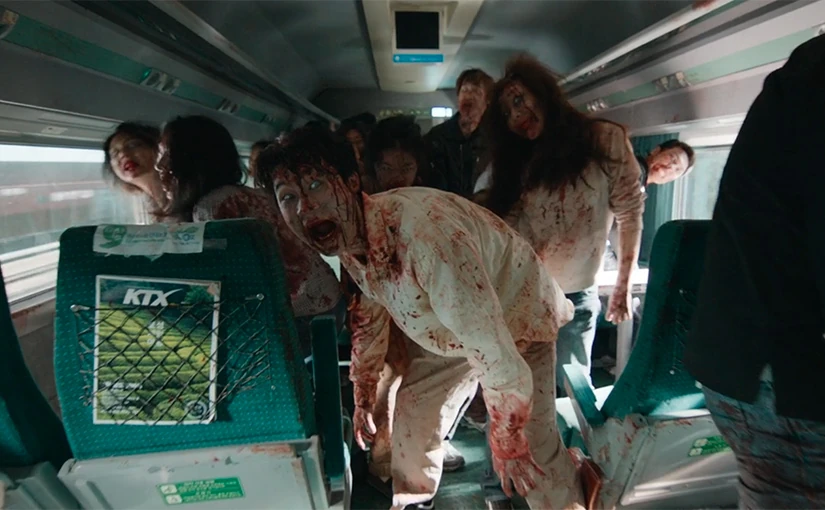
Yeon Sang-ho’s South Korean zombie thriller takes a familiar premise and elevates it through character-driven storytelling. A fund manager and his daughter board a high-speed train from Seoul to Busan just as a zombie outbreak engulfs the country. What follows is a relentless survival story that uses the confined space of the train to create maximum tension.
Train to Busan succeeds because it makes you care about every passenger on that train. The action sequences are thrilling, the scares are genuine, and the film’s commentary on class and selfishness in the face of crisis gives it thematic depth. The film’s emotional climax, in which a character sacrifices himself to save others, is one of the most powerful moments in any zombie film. It is both a crowd-pleaser and a serious work of cinema.
6. The Return of the Living Dead (1985)
Dan O’Bannon’s horror comedy takes a different approach to the zombie genre, creating a film that is simultaneously hilarious and genuinely scary. The story follows two employees at a medical supply company who accidentally release a military chemical that reanimates the dead. Unlike Romero’s zombies, which eat brains out of instinct, these zombies actively crave brains and can speak, think, and feel pain.
The Return of the Living Dead is a film that delights in its own absurdity. The scene in which a zombie begs to be put out of its misery is both funny and disturbing, and the film’s willingness to embrace both tones simultaneously gives it a unique flavor. The film’s punk rock soundtrack and irreverent humor set it apart from every other zombie film, and its influence on the horror-comedy genre is significant.
7. Zombieland (2009)
Ruben Fleischer’s zombie comedy is one of the most entertaining entries in the genre, combining genuine scares with sharp humor and heartfelt character development. Jesse Eisenberg, Woody Harrelson, Emma Stone, and Abigail Breslin make up a quartet of survivors navigating a zombie-infested America, and their chemistry is the engine that drives the film. Harrelson’s Tallahassee is a particular standout, a zombie-killing machine with a surprisingly soft side.
Zombieland is a film that understands the joy of the zombie apocalypse. It celebrates the freedom that comes when the rules of civilization no longer apply, while also acknowledging the loneliness and loss that such a world entails. The film’s rules for surviving the zombie apocalypse are both funny and practical, and its set pieces, including a zombie-infested amusement park, are genuinely thrilling. The film spawned a sequel that, while enjoyable, never quite matched the original’s freshness.
8. Day of the Dead (1985)
Romero’s third zombie film is the darkest and most pessimistic of his original trilogy. Set in an underground bunker where a small group of scientists and military personnel are trying to find a solution to the zombie apocalypse, the film is a claustrophobic meditation on the failure of human cooperation in the face of crisis. The tension between the scientists and the military is the real threat, not the zombies outside.
Day of the Dead is a film about the limits of rationality and the inevitability of collapse. The scientists’ attempts to understand the zombies are portrayed as futile, and the military’s brutality is shown to be just as dangerous as the undead. The character of Bub, a zombie who shows signs of memory and emotion, is one of the most fascinating creations in the genre, suggesting that even the undead retain something of their former humanity.
9. The Girl with All the Gifts (2016)
Colm McCarthy’s British zombie film takes a fresh approach to the genre by focusing on a group of children who are infected with the zombie fungus but retain their intelligence and personality. Gemma Arterton, Glenn Close, and Paddy Considine star alongside Sennia Nanua, who plays Melanie, a young girl who may hold the key to humanity’s survival.
The Girl with All the Gifts is a film about the next stage of human evolution. It asks whether the infected children represent the end of humanity or its beginning, and its answer is both hopeful and terrifying. The film’s ending is one of the most thought-provoking in the genre, suggesting that survival may require not defeating the zombies but becoming them. It is a zombie film that makes you think as well as feel.
10. Rec (2007)
Jaume Balaguero and Paco Plaza’s Spanish found-footage horror film is one of the most intense zombie-adjacent films ever made. A television reporter and her cameraman follow a fire crew into an apartment building, only to find themselves trapped with residents who are being infected by a mysterious rage-inducing pathogen. The found-footage format creates an immediacy that makes every scare feel real.
Rec is a film that generates tension through claustrophobia and the relentless escalation of danger. The confined space of the apartment building becomes a pressure cooker, and the infection spreads with terrifying speed. The film’s final sequence, set in the building’s attic, is one of the most terrifying endings in any horror film. The American remake, Quarantine, is also effective, but the original Spanish version has a raw intensity that is hard to match.
Why Zombies Endure
The zombie endures as a horror icon because it is infinitely adaptable. It can represent consumerism, disease, social collapse, loss of individuality, or any number of other fears. The zombie is a blank slate onto which society projects its anxieties, and each generation gets the zombie movie it deserves. As long as human beings have fears about the future, the zombie will continue to rise from its grave.
Conclusion: The Undead Hall of Fame
These films represent the best of the zombie genre, and each one brings something unique to the table. Whether you prefer Romero’s social commentary, Boyle’s visceral terror, or Wright’s comedic brilliance, there is a zombie film on this list that will satisfy. Watch them, and you will see why the undead continue to captivate audiences decades after they first shambled onto the screen.